THESHIELD Garkuwa
Related Articles
By Lamara Garba Azare,
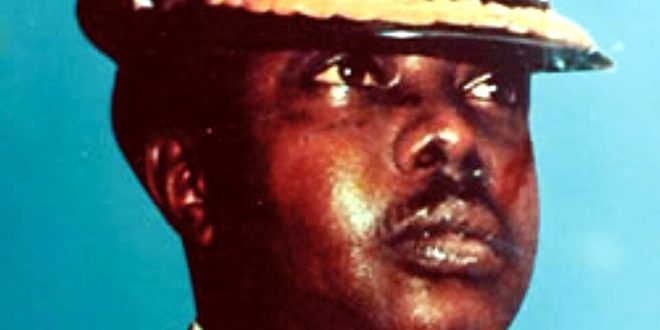
There are men who pass through power and there are men who redefine it. Murtala Ramat Mohammed belonged to that rare breed who carried authority lightly and carried conscience heavily. He was a comrade in uniform, a patriot in spirit, a true son of Africa whose love for this nation was not performed for applause but proven through action.
He rose to lead the most populous Black nation on earth, yet power never altered his posture or polluted his character. He remained simple in conduct, measured in speech and humble in lifestyle. He never allowed the office to swallow the man. While others would have embraced sirens and spectacle, he chose restraint. His convoy moved without blaring horns. He obeyed traffic lights like every other citizen. He respected traffic wardens as custodians of public order.
There is that unforgettable moment when a traffic officer, having recognized his car, stopped other motorists to allow him pass. The General was displeased. The warden was punished for denying other road users their right of way, and his driver was sternly warned for attempting to move against traffic. In that simple but powerful incident, he taught a nation that no one is above the law, not even the Head of State. Leadership for him was not exemption from rules but submission to them.
His humility went even deeper. Often, dressed in private attire, he would visit markets quietly, blending into the crowd to ask about the prices of food and daily commodities. He wanted to feel the pulse of ordinary Nigerians. He wanted to understand how families were coping. He believed policies should not be crafted from distant offices alone but from lived realities. That simple habit revealed a leader who listened before he acted and who measured governance by the condition of the common man.
When he assumed power in 1975, he did so without plunging the country into bloodshed. In a continent where coups often left painful scars, his intervention was swift and calculated, aimed at correcting a drift rather than destroying the state. It reflected firmness guided by restraint. He was a soldier, yes, but one who understood that strength without humanity is weakness in disguise.
In barely six months, he moved with urgency that startled the establishment. Files that once gathered dust began to move. Decisions were taken with clarity. He restructured the civil service in a bold attempt to restore efficiency and discipline. He initiated the process that led to the relocation of the capital to Abuja, a decision born of foresight and national balance. He confronted corruption without apology and made it clear that public office was a trust to be guarded, not an opportunity to be exploited.
His voice on the continental stage was equally resolute. When he declared that Africa has come of age, he was not uttering rhetoric. He was announcing a shift in posture. Nigeria under his watch stood firm in support of liberation movements and insisted on African dignity in global affairs. He believed that this continent deserved respect earned through courage and self confidence.
Then, just as the nation began to feel the rhythm of disciplined governance, tragedy struck on February 13, 1976. Bullets interrupted a vision. A country stood still in shock. Africa mourned one of its brightest sons. He had ruled for only a short season, yet the weight of his impact surpassed the length of his tenure.
Perhaps if he had remained longer, Nigeria would have charted a different course. Perhaps institutions would have grown around principle rather than convenience. Perhaps accountability would have become culture rather than campaign language. We can only imagine. But what cannot be imagined away is the moral clarity he represented.
Today, when citizens speak about abandoned ideals and weakened standards, his memory returns like a measuring rod. When convoys roar past traffic lights with entitlement, his quiet obedience becomes a silent rebuke. When policies lose touch with the marketplace realities of ordinary people, we remember the Head of State who walked into markets in simple clothes to ask the price of garri and rice.
He was not perfect, but he was purposeful. He did not govern to decorate history books. He governed to correct a nation. He detested corruption because he understood the damage it inflicts on the weakest citizens. He valued humility because he knew that power is fleeting but accountability before Almighty Allah is eternal.
Nigeria lost more than a leader. Africa lost a rare gem whose patriotism was sincere and whose heart beat for the dignity of his people. We pray that Allah grants Murtala Ramat Mohammed Aljannatul Firdaus and illuminates his resting place. We pray that his sacrifices count for him in the hereafter. And we pray that Nigeria rediscovers the discipline, courage and sincerity that defined his brief but remarkable stewardship.
Some leaders occupy office. Others transform it. Murtala Ramat Mohammed transformed it. His six months continue to echo across five decades because they were anchored in conviction and service.
Until Nigeria fully embraces integrity in leadership, until Africa truly stands in the maturity he proclaimed, his story will remain both our inspiration and our challenge. His life reminds us that greatness is not measured by duration in power but by depth of impact, not by noise but by noble action, not by privilege but by principle.
He came, he led, and though he left too soon, he still speaks through the standard he set.
Lamara Garba Azare, a veteran journalist writes from Kano